Sometimes you come across a car that makes you think: how on earth have I never seen this before? The YES! Young Engineers Sportscar is one such car. At first glance, this little German sports car seems to have little in common with the Audi TT. Yet there is a surprising family connection. The YES! was, in fact, built around technology from the VAG stable. Initially with the well-known 1.8T, and later even with the 3.2 V6. Engines that we, of course, know all too well from the TT. But the comparison doesn’t stop there. The roll bars are also somewhat reminiscent of the TT Roadster.
It all started with the Clubsport
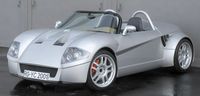
The story begins with Herbert Funke and Philipp Will. What they originally developed as a final-year project proved so interesting that it eventually grew into a proper sports car: the YES! Clubsport.
© Photo: Young Engineers Sportscar
The formula was simple. Make it small, make it light above all else, and fit it with a powerful engine. The 1.8T delivered around 280 pk in the Clubsport, whilst the weight remained under 800 kilos. And with that, YES! immediately achieved a rather remarkable power-to-weight ratio. What’s more, the engine wasn’t at the front, as in the TT, but behind the driver. The power was sent to the rear wheels. From the outset, the YES! was therefore much more of a pure sports car than a comfortable roadster.
The 1st generatione YES! Roadster
From 2001 onwards, the Clubsport was succeeded by the first-generation YES! Roadster. The basic formula remained the same, but the car was made slightly more suitable for everyday use. For example, it was fitted with central locking and offered a little more comfort.

© Photo: Young Engineers Sportscar
Of course, that added weight. The Roadster became about 40 kilos heavier, but at around 800 kilos, it was still a featherweight.
Its dimensions also made the YES! special. At around 3.6 metres, it is about 40 centimetres shorter than a TT Roadster. It also lacks a proper convertible top; the YES! has a simple speedster cover. Yet there are recognisable details too. The roll bars, for example, are surprisingly reminiscent of the TT Roadster. And beneath that bodywork lies an engine that will be familiar to TT enthusiasts: the 1.8T.
YES! Cup/R – from light to extreme
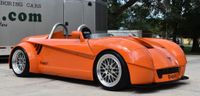
But apparently, even the very first YES! wasn’t light enough. The YES! Cup/R was developed for the racetrack. Anything that wasn’t essential could be removed. Doors, the windscreen and standard headlights were no longer a given. The result was a car weighing around 600 kilos.
© Photo: bringatrailer.com | Wire Wheel Classic Sports Cars
Meanwhile, the 1.8T had been tuned to around 340 pk. This gave it a power-to-weight ratio that was quite absurd. A sort of VAG-powered go-kart. For TT enthusiasts, this might well be the most exciting ‘YES!’ to discover. The same 1.8T family that makes the TT so recognisable, but in a car that’s hundreds of kilos lighter and sends extreme power exclusively to the rear wheels.
2006 the 2nd generation
In 2006, the second generation arrived, larger and slightly more comfortable. But once again, the TT family was not forgotten. The 3.2 V6 made its debut; with around 255 pk and 330 Nm, it went from 0 to 100 km/h in 4.9 seconds and had a top speed of 255 km/h. The German price of the 3.2 V6 version back then was €57,370. Those who wanted a bit more could even opt for a turbo version with around 355 pk. Weighing in at around 900 kilos, that must have been quite a spectacular little runabout.

© Photo: Young Engineers Sportscar
Small batch and handmade
The YES! was, moreover, a truly small-scale production run. From the outset, the cars were hand-built by Funke & Will AG in a restored 1930s hangar at Grossenhain Airport. In the end, only a few hundred examples left the workshop. It is estimated that 150 of these were first-generation models. In 2009, following the bankruptcy of YES!, the adventure came to an end.
So it’s certainly no Audi TT. But as a small, ultra-light German open-top sports car with a 1.8T or 3.2 V6 from the same VAG family, roll bars and a unique take on open-top driving, the YES! is nonetheless a very special distant cousin of the TT.
The TT has its engine at the front. The YES! had it at the rear. And to be honest… with 355 pk and weighing just 900 kilos, that doesn’t sound half bad at all. Feel free to spend an evening trawling the search engines to discover everything about this small series. Because there’s a surprising amount to be found.
© Header photo: Young Engineers Sportscar